Between the 17th and 24th of August we are visiting the Norwegian town Haugesundfor the above film festival.
Aurore visited this festival in 2000, when she saw 63 films in 10 days. We'll see how many films we will be able to see this time but Aurore probably more than me as she has got a press ackreditation, giving her a chance to see films before they are released publically - on the condition that she does not write about them on her blog dedicated to Scandinavian film.
As being one of the - maximum - 5 most knowledgable about Scandinavian film in her generation, her blog - www.cineaster.net - is one of the best if you want to learn something about this subject. She uses both older and recent films in order to explore and explain the development within the film making in "the North".
You will be able to follow her during her time in Haugesund and if the technology works, she will be broadcasting direct from the Amanda Awards tomorrow, Saturday.
Norwegian blond young women great us welcome to the film festival with the Norwegian flag in their arms and dressed in their local traditional clothings.
Two young men taking photos of
the young women or pretending being journalists?
A statue depicting the Amanda Awardin a bigger format.
The name "Amanda" is derived from a song, or sea shanty, titled "Amanda fra (from) Haugesund". Supposedly the song in turn refers to a real woman from the 1920s a single mother who made a living from selling liquor to sailors during the prohibition period.
a member of the cast in the film Hodejegerne, (in English Headhunters). In the leading role in this film we also can see Aksel Hennie an actor we had the pleasure see "live" at the third Norwegian Film Festival in Stockholm in 2009, when he and part of the crue introduced the film Max Manus.
For those of you intrested in competing with the short films you've directed, this competition is open for everyone all around the world!!! It's held in La Châtre in the central parts of France but everyone is welcome to participate, no matter if you come from Greenland, Chile, Australia, Japan, Uganda or any other country in the world! Look at this page: Berry Movies for further information or Facebook and Berry Movies. The last day for sending your films to the jury is the 23 of September this year! If you have any questions not answered by the sites above, you can always write to me or my wife Aurore, through this blog. We were members of the jury last year and will probably participate this year too. Good Luck!
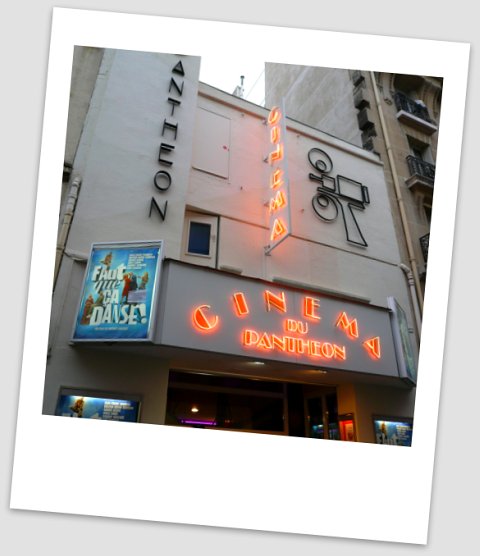
This is the first day ofCiné Nordica in Paris, the Nordic (of course) film festival, hopefully becoming the worthy heir of Cinéma Nordique in Rouen, R.I.P. The festival is held at Le Cinéma Du Panthéon, 13 Rue Victor Cousin. Aurore left La Châtre the third of March (Thursday) and I will join her on Sunday, leaving the center of France at 3 p.m.
This - The Sound of Noise - is one of the films competing in La Semaine de la Critique (Cannes Critics Week) this year. This is of course the more interesting for us since Aurore participated as Production Assistant on this film. Directors: Ola Simonsson & Johannes Stjärne Nilsson. Producer: Olivier Guerpillon. She also worked as Production Assistant on another film being selected for La Camera d'Or in 2008, namely Les Grandes Personnes. That film being the first Swedish-French film cooperation in decades. Both of them produced byDfm Fiktion (Aurore's workplace for some time) in cooperation with others.
This is the movie theater used for all the screenings: Le Melvillean art cinema in need of money to survive. On the poster above the entrance you can read (in French): "Save Le Melville". This goes for the film festival as well. If you happen to be a lover of film and not least art films and nordic films, having some money left, why not contact Le Melville in order to become a sponsor, no matter how small your contribution is.
This is the tent/pavillion where all information could be obtained, tickets bought, discussing film with other film lovers, listening to concerts and drinking coffee, eating croissants.
And in this photo you see three enthusiastic cineasts and cinephiles surrounding Aurore: Patrick, James and Eric. Aurore had met both Patrick and James before but not Eric I think. They became our special conversation- and discussion partners concerning film and culture and they also became my friends, as well as they were Aurore's! All three very nice, witty and humorous men passionate, not only for the cinema but for cultural expressions in all its diversity. From Patrick we got a DVD containing a film he made some years ago when the Swedish director Vilgot Sjöman (a director Aurore met when writing an academic work about his film 491) visited Rouen and Cinéma Nordique. The film portrays Vilgot Sjöman when walking in the footsteps of Gustave Flaubert, visiting different places where Flaubert lived and worked during his days in Rouen. A very charming film with the son of Sjöman functioning as interpreter. Vilgot Sjöman did however speak french but his son even better as he has worked and lived in France for many years. James is a film maker who also visits different film festivals and he does really have a huge knowledge of film. As he has some connections with Châteauroux and visits the town from time to time, we'll hopefully be able to meet him in a couple of weeks when he arrives to Le Centre.
Below some posters showing some of the films this year and earlier years:
Un hiver en temps de guerre (Oorlogswinter/Winter in Wartime) by Martin Koolhoven is a film about a young boy - Michiel - who during World War II becomes involved in the resistance movement when rescuing a British soldier who has landed in the forests after parachuting himself out of his plane.
He engages his sister but is not aware of all the dangers lurking behind the corner. His feelings of content when he sees that he actually is able to help the British soldier - in spite of the warnings from his parents and uncle - becomes predominant. After a while he starts to revaluate both his father (as he has seen as a coward) and his uncle (whom he has regarded as courageous). Is his uncle really the war hero he thought him to be? A rather traditionally told story but well realized and the acting is good, not least the young actor in the role as Michiel.
The good heart by Dagur Kari is a story about Jacques, the owner of a shabby bar, where only certain guests are welcomed. In order to let the others know that they'd better look for another bar, he's extremally unpleasant and rude towards them. One day he finds a homeless young man (Lucas) who lives under the Brooklyn Bridge and as Jacques earlier has suffered five heart attacks - it' during the fifth he meets the young man in the hospital - he wants a successor to his establishment. Almost forcing Lucas to his bar, he trains him and not least in the art of being rude. It all seem to work out well until one day a drunken stewardess, terrified of flying, shows up at the bar. Jacques doesn't want a woman in the bar (as marines earlier were afraid of having women on board a ship) and of course Lucas falls in love with her. This deveolopment causes tremendous problems for all three - and for the clients. Brian Cox as Jacques and Paul Dano as Lucas are both very good in their characterisation of these two rather unmatched men but in spite of good acting and a rather unusual story, it tends to become more mainstream than we anticipated at the beginning of the film. After a while one know how the different characters will act and the end is rather predictable and at the same time somewhat of a 'happy ending' for both of them. These were the two last films we had the chance to see as we had to pack our things , check out from our room and take the train to Paris at 19.00.
We have luckily also had the chance seeing a great deal of Rouen and as this was the first time for me - Gunnar - visiting this charming city, I let myself be guided by Aurore who, between 2000 and 2004, annually visited Cinéma Nordique and Rouen. She even worked a summer as a florist, with her cousin Aurelièn as boss in the flower shop he owned in those days.
Au début, c'était bien (Der Anfang war gut /Alku Oli Hyvä/Off to a Good Start) is a documentary by Susanna Salonen, a very personal one as it tells the story about her mother and how she ran away from her responsibilities as a mother, returning 15 years later! Salonen was 18 years old at the time and now she wants some answers concerning why her mother acted the way she did. At the beginning her mother doesn't seem to think that her behaviour was strange at all, she just "wanted to get away from it all for a while". A while? 15 years? She had married a man she met during her travels and moved to Australia and later on to Lübeck where Susanna lives. Susanna has a sister living in Finland. Their mother is a dreamer and she doesn't feel at home anywhere and in the end she starts dreaming of moving again, this time to Italy. This film is very self-revealing and it's hard to understand how this woman, mother of two children, can disappear like this, sending a post card from time to time (calling her daughters her "small monsters") but not explaining herself to her children. It's by no means a unique story but nevertheless rather inexplicable. If she felt uncomfortable with her husband is one thing but punishing her children like this, or at least leaving them with a lot of unanswered questions, is quite extraordinarily.
L'Honneur des Vétérans (Krigsseilerna med æren i behold) is a documentary (again) - director Eilert Munch Lund - who reveals the story about the Norwegian merchant marines who was involved in the war seven months before Germany occupied Norwegian soil.
38000 civilian marines risked their lives and some of them participated during the D-Day. In total 4000 died during the war as a result of the risks they took when trying to deliver goods and weapons to Great Britain and other countries fighting Germany. When the war was over, they were forgotten and when returning to Norway, noone recognized their efforts and when the soldiers were given homage, the civilian marines disappeared in the shadows, recognized decades after the war was over. This reminds me of a group of undercover Norwegian soldiers/agents - the so called XU:s (X=unknown, U=undercover) - who during the war infiltrated the Germans and pretended to be nazis and sympathizers, taking enormous risks, subjected to torture, some dying under torture or being executed. They were not given the chance to reveal themselves after the war, because of Norways Official Secrets Act. This meant that not only had they risked their lives and achieved a lot during the war against Germany but they were for 50 years seen as nazis by their families and friends. When reaching the age of 90 (or more), those still alive were restituted!
He is held prisoner for years by a Scotish chieftain but thanks to a young boy, he kills the chiftain and many of his warriors and joins a band of Vikings who at first are headed towards the Holy Land, then heading towards what they think is Scandinavia to fight the widespread Christianity. They wind up elsewhere and instead of hunting Christians they become hunted by another group of people, in a totally different country. During this fight One Eye goes deeper and deeper inside himself, trying to get to find out who he actually is and why he exists and if there even might be a higher goal to his life. The little boy follows him through this inner and outer journey. If the ambition is to make a film about finding a philosophy of life, through external hardship, leading to internal reflections and making this a combination of a 'road movie' and stalker-like story, I think Refn has failed. It's a lot of rituals and using of different camera angles and photos of the nature in the ambition to make this as mystic and intriguing as possible but in the end it becomes a story of a violent man who more through these different external rituals than through real introspection make a final decision concerning his life.
Pusher 2 by Refn is - as I've written before - the weakest link in his triology.
Thomas is a story about a lonesome man with few friends, isolating himself from others in his small and very worn-down appartment.
Gradually we get to know him as a doctor who many years ago assisted his terminally ill wife in dying. For this he was sentenced to prison and unable to continue working as a doctor. One day he meets a man on a bench and they start to talk about everyday things and chess - Thomas' only passion in life - and one day the other man presents himself as the judge (now pensioner) sentencing him to prison. From this point on the life of Thomas - and to some extent the judge - changes. This is again a quietly told film with good acting and with small means huge questions are revealed. Director: Miika Soini.
70 000 people in the audience listened to this extraordinary concert filled with different kinds of music and a lot of humour. A very charming, entertaining and well made concert film about a musical, not so common, cooperation.
Norwegian shortcuts 2/2continues displaying different 'uninhabitable' places in Norway where we get to meet persons who can't imagine living elsewhere. Real enthusiasts (Le hameau de Vassvika/Vassvika; L'île de Litle Færøy/Little Færøy; Le port de Kirkefjord/Kirkefjorden i Lofoten).
Bleeder, a film by Nicolas Winding Refn - again. In this film we meet Leo a violent man who finds out that his girlfriend is pregnant. He is not at all mature enough taking on a responsibility like a child and his only identity seem to be violence and crime. To this one can add that he is suspicous concerning whether or not he's actually the father and he also dislikes that his girlfriends brother - a man with no higher moral standards either (more than 'protecting' his sister) - interfer in their private life. One of his friends is called Lenny, a likewise 'boyish', immature, unintellectual man, (Mads Mikkelsen) living life through the films he sells in a video shop. He meets a girl working as a waitress and living her life through books, a meeting that changes both their lives. Well I don't have to tell more than this. When it comes to narrative it's a rather predictable film but incredibly well directed and again, aesthetically very appealing. The success of these films by Refn - and other Danish films - is to a great extent due to the fact that Danish actors are extremely good. Among the Nordic countries I regard the Danish and Norwegian actors being the best, followed by the Finnish and Icelandic. Being a Swede I (Gunnar) don't think we have the same high standard among actors in Sweden compared to our neighbours.
En Eaux Troubles(De Usynligein Norwegian and Troubled Water in English) by Erik Poppe is next. In 2005, at the Norwegian Film Festival, Kjempegreit, we saw his film Hawaii-Oslo, a 'Short Cut'-inspired film, telling a story from different angles. In this film about a woman whos child is kidnapped (for mysterious reasons) by two young men who incidantally causes the death of her boy, Poppe tries to use the same techic. It's a story about guilt, anger, the possibilities to go on with your life though you have committed a terrible crime or lost someone you love, moral issues of a certain interest. However, in this film the 'short cut'-technic becomes an obsession making the film rather repetitive and actually not adding anything to our understanding of these issues. It feels more as if Poppe wanted to try this concept again, only from an aesthetically or tematic point of view. It prolongs the film but doesn't add anything substantial to this œuvre. Good acting and a interesting scenario but not more than that.
Inside Job (Fear X) is Refns first(?) film using Amercian actors. Harry works as a security guard and one day his wife is brutally murdered, her body found next to the body of a policeman. He starts to go through the surveillance tapes in order to find a clue to the death of his wife - as the police doesn't seem eager to follow it up - and one day he finds clues leading him to the house opposite the street. He becomes obsessed with this 'case' and this leads him deeper and deeper into other mysteries and also deeper into his own psyche. Is he a victim of his own mind or has he found something substantial? In this case as in many others, the idea is good but the implementation less impressing. It's by no means a bad film but it doesn't seem to be coherent in its narrative. I also get the impression that Refn is a better director when it comes to directing 'his' Danish actors than when it comes to American or foreign actors, judging from this film.
Nord (North) by Rune Denstad Langlo is a very entertaining and charming 'road movie'. At the Norwegian Film Festival in Stockholm (mentioned above) we saw Langlo's film 'Alt for Norge', a film we liked very much. In this film we meet ski athlete Jomar working at a ski park but afflicted by depressions. To flee these depressions and nervous problems, he starts a journey towards the norhtern parts of Norway, as he is convinced that he will find the necessary tranquility there. On this trip he come to meet a lot of singular (unique) individuals, enriching his life and making him see that he is not the only one with problems in life. He also learns that even if you have problems you can be at ease with yourself. This not least through a meeting with a Same/Lapp who commit suicide in a very personal way. Jomar takes advantage of people though but in the end he seems to have found his Schlaraffenland or was perhaps the journey the most important part - not the goal?
Aurore voted for this film and I fully understand this as it was incredibly charming.
'Norwegian shortcuts', half an hour each, depicting people in Norway living in places alongside the 'fjords' that one hardly think is habitable (partly the title of these documentaries).
These films are very interesting and it's impressing to see how people, not least the elderly ones, remain in their houses, even though they are located on top of a mountain, with scarcely any roads! The name of the three documentaries are (in French): La ferme de Kjeåsen (Kjeåsen i Hardangerfjorden); La ferme de Styvi (Styvi i Nærøyfjorden); Le hameau de Finden (Finden i Sogn).
Révolution (Kenen joukoissa seisot) by Jouko Aaltonen tells the story about different music groups with a political, left-wing message, touring Finland during the 1970's. We get to see their performances during these years but also hear them speak about how they see themselves today. During these years countries in Scandinavia and elsewhere in the world, had a great representation of left wing political activists, all with a huge engagement for what they thougt was good and right but sometimes also very naive. When protesting against 'imperialism', not least American dito, they forgot that the countries they held high - China, North Corea, Russia, Cuba and so forth - actually were - and still are - dictatorships. Not even when revealed they backed from their position, in some cases (Jan Myrdal in Sweden e.g. - one of the most extremist left wing debaters I know). This documentary displays the naive and sometimes even cynical approach among the participants in these groups and only one person - at the end of the film - do actually say something more self-critical when establishing that he can't stand up for those ideals today after becoming aware of the terror in the so called 'communistic' countries he held high in those years.
Un conte finlandais(Kolme viisasta miestä/Three Wise Men) by Mika Kaurismäki is a film about three old friends who haven't met since childhood. Incidentally they meet during Christmas and they all go to a karaoke bar where they start, not only to sing (oh my God!) but also tell their life-stories to each other, life-stories filled with problems - of course. The film starts of quite well but peu à peu it looses the rythm and does'nt become as interesting as we thought it would be, at the beginning of the film. Kaurismäki also elaborates the story adding some 'side stories' (- and persons), not that important for the film and hardly even interesting. Mika is not as masterful as his brother.
The next film is Retour à Oegsteest (Terug naar Oegstgeest/Return to Oegstgeest) by Theo van Gogh (the great-great-grandson of Theo van Gogh, the brother of Vncent van Gogh). I've only seen one film by van Gogh earlier and that was Interview. I was'nt to impressed by that film- even if the idea and the acting was good - and this film didn't make us jump up and down either, even if it was a good handicraft cinematically. It's a story about Jan a man who as a child was raised in a very austere environment, his parents (not least his father) being very orthodox protestants, trying to raise the children in 'fear of God'. He visits his father on the latters deathbed and tries to reconcile with him before the father passes on to a higher existence. As young Jan tried to revolt, a theme we've seen in many films dealing with questions concerning orthodox religious practice, not only in the œuvres by Ingmar Bergman. A rather conventionally told film, reminding of similar films with similar themes. Not at all bad but hardly a masterpiece.
Calvaire is directed by Fabrice Du Welz. This film is shown under the heading 'L'Absurde séance'. The 'absurd' about this film is that it deals with people living excluded from the rest of the world, adapting somewhat orthodox habits, as having sex with animals or likewise. The story begins with us meeting a man, working as an entertainer in homes for aged people, wanting to become a more well known performer, preferably a star. His car brokes down when heading for another town and he meets a man, leading him to a hostel with no guests but a very kind proprietor, who takes care of both him and his car (one think). However, behind this surface of kindness, it lurks a personality with a very special taste for company and 'entertainment', widowed and wanting someone to take his wifes place. This escalates into a nightmare for the man and it becomes his 'calvaria', his road of pain, indluding torture and bizarre behaviour by the owner of the inn. We felt that this was mishmash of Deliverance, Psycho, The Texas Chain Saw Massacre, Snow White and the Seven Dwarfs plus some other films in different categories, all this poored down a kettle, stirred around a little and served. We found the idea good but it to much resembled parts of the above mentioned movies (and others) not making this one as original as it could have become.
We started this day with the film Videocracy by the Swedish director Erik Gandini (of Italian descent).
This œuvre depicts Italy and its dubious prime minister Silvio Berlusconi (born the same day as I, Gunnar) and all his 'small popes'/petty kings running the country from their different posts in society not least radio- and tv-statons. The picture one get from this film is that Italy and its population is manipulated using different kinds of imbecile tv-shows with half naked women and men and quiz shows of more or less humiliating character (nothing unique for Italy however), leading people away from important issues and the real problems in society. The film became very controversial in Italy and I can't remember if it was stopped from being distributed and shown in Italy or if it only was the ambiton of Berlusconi that it should be stopped. We had though expected something more critical and more controversial than this. Imbecile tv-shows and the like is something universal - unfortunately - and serves in Italy as well as in Sweden or any other country in the world, to create non-enlightened and passive citizens paving the way for the same kind of politicians. Quite an interesting documentary but not as provocative or controversial as we had thought.
Pusher 3 (- je suis l'ange de la mort/Pusher 3 – I'm the Angel of Death) is the third (of course) and last film in the trilogy with the same name, directed by Nicolas Winding Refn (born the same day as I, Gunnar but ten years younger). As I have written before we both like the aesthetics in Refns films and we found the third film being the best, the second the weakest link. These films depicts the criminal world in Denmark, Copenhagen, among not least drug dealers from different parts of the world. Death and violence is an integral part of these films. As I (Gunnar) have been working among people with drug problems and criminals, I can say that these films actually show the reality, just as tough as it can be. This said as some people seem to have thought that Winding Refn exaggerated the life of criminal individuals.
Eternel Regret(a French translation but the original title is Jernanger/the English; The Storm in My Heart), by Pål Jackman (no his not related to Hugh Jackman as far as I know!) is a film about a man with great problems with alcohol who owns and lives on a boat called Jernanger. By and by we get to understand that when he was younger, he had a great love in another pat of the country, a woman to whom he gave the promise to return. His ambiton was to return with this boat and to live with her and maybe sail away but things came in the way - that is to say alcohol and bitterness. A young, homeless man, stay on the boat one night, gets discovered and saving the elderly man when he is afflicted with a heart attack. The young man do also have a loved one but instead of taking care of her (as they plan to get engaged or married), he starts helping the elderly man, restoring the boat, in order to - at last - make his trip to his loved one, in the northern parts of the country. This project is filled with great many problems and how it ends I'm not going to tell. A quite charming film with one of Aurore's favourite actors Bjørn Sundquist!
La Reine et moi (Drottningen och jag/ The Queen and I), by the Swedish-Iranian director Nahid Persson Sarvestani show us why and how Persson Sarvestani made a documentary about the former empress Farah Pahlavi. The making of this documentary creates a lot of emotional turmoil within both these women, as Nahid Persson Sarvestani, as a young woman living in Iran, was a decisive enemy to the shah and his wife, fighting for the return of ayatollah Khomeini. Later one - when the promises from the ayatollah about freedom of speech and the same democratic rights as in democratic countries all the world, was betrayed - Persson Sarvestani turned against the ayatollah. The documentary is very interesting, revealing sentiments and historic background information around the two women, information that also reveals the history of Iran before and after the shah. Persson Sarvestani has made two other documentaries about a muslim man living with four wives ('Fyra fruar och en man'/'Four Wives - One Man') and another one about prostitution in Iran ('Prostitution bakom slöjan'/'Prostitution: Behind the Veil'), sanctioned by the priesthood, in order to make it possible for muslim men to go to prostitutes without breaking the Sharia laws! How is this done? It's done as follows: The imams married the muslim men with the prostituted women during their 'encounter' and when it was all over, he divorced them! This last film created a lot of turmoil among the leadership in Iran and Nahid Persson Sarvestani was forbidden to visit the country and she also received death threats.
I find her documentaries very interesting and they tell us a lot about the life in Iran and other cultural contexts, for better and for worse.
Huutajat/La Chorale Hurlante/Screaming Men by Mika Ronkainen, is a very excentric and extremely charming film. It tells the story about an unusual choir where the singing qualities is not related to how well or beautiful you sing but how loud you can sing. This choir has toured the world and also met some controversy when trying to sing different National Anthems in their very special way. According to the Islandic constitution, it was forbidden to modify the National Anthem in any way. In the film we get to see how they solve this. We also get to follow their selection process when candidates arrive to participate and there is no lack of eager aspirants!
Les Mystères de Snaefellsjökull (Dularöfl Snæfellsjökull/The Mysteries of Snæfellsjökull) by Jean-Michel Roux (homepage of Jean-Michel Roux) is a documentary about a jökull (glacier) on Iceland filled with mystic connotations as the title indicates. The director - Roux - answered questions after the screening and I had the chance to talk to him a couple of times. It's a man with great knowledge about the Icelandic landscape and some of its more mysterious historic past, as displayed not least in the nature of the island. It was a very interesting and beautiful film telling the story about this glacier and the different myths or traditions linked to it, as explained by different icelandics with different experiences of Snaefellsjökull. In connection to this we also got to see his short film Le coeur de la terre.
Soul Kitchen was made by director Fatih Akin (whos films Gegen die Wand and Im Juli I, Gunnar, liked very much). It's a comedy about a group of people with different kinds of problems, coming together to start a restaurant with a special touch, namely soul music when eating. We get to meet two brothers, one coming from prison, the other wanting to have a restaurant with better food than the one served at the local 'eating place'. This creates problems and his brother and the different characters also contribute with even more trouble. This is not the best film by Akin but it had some very amusing parts, not least a scene with the real mother of Fatih Akin wanting order in the house!
Bronson is one of the latest films by the Danish director Nicolas Winding Refn. It tells the story about the most violent prisoner in Great Britain, Charles Bronson (no, not the actor). Orignially he had another name but adopted the name of the actor and gradually he changes and take on another alter ego, maybe resembling of Bronson in his more violent films? He was sentenced to seven years in prison for a robbery but stays 30 years in solitary confinement(!) to a great deal caused by his own behaviour but also because he becomes a target for violence committed by the guards. I like the aesthetics in many of Refns films but this film left me rather empty, displaying a rather unscrupulous man, using only his muscles to solve his problems but only creating new. After a while this gets rather boring, as there are no other angles pointing in to the person behind the mask.
Brúðguminn/White Night Wedding is made by Baltasar Kormákur, the icelandic director who among other films made 101 Reykjavík (a film I, Gunnar, liked). Jon is a middle-aged professor who is going to get married to one of his students, half his age and this decision encounter some problems, or rather a great deal of problems. It's a comedy with some rather amusing parts and lovely icelandic landscapes but on the whole not so interesting and all to long. Not the length in itself but it feels as if Kormákur wants to fill out some time in space, not needed to understand the story or to give it more depth.
La chute de l'Union Soviéique (Eestlased Kremlis - NSV Liidu Lagunemise Lugu/The Inside Story of Moscow's Kremlin.The Collapse of the Sovjet Union) is - as the title indicates - a documentary about the last days of this vast empire, seen from an Estonian perspective. Director Toomas Lepp. We got to see the former leaders of the former Sovjet Union (Lenin, Stalin, Brezjnev, Gorbatchev, Ieltsin) but also the current Russian leaders Medvedev and Poutin, leaders from the former East block countries and other prominent figures like Lech Walesa. The story circles around the different factors leading up to the fall of the Berlin Wall, including the discussions between Gorbatchev and different leaders in the 'satellite states'. It was a very interesting documentary and even if the story is well known, I think it shed some light on aspects not so well known to the public.
Varg (Le Loup/Wolf)is a film by the Swedish director Daniel Alfredsson with Peter Stormare in the leading role. It tells the story about a loner (lone-wolf) - Klemens (Stormare) - a Sami or Lapp who lives in a small cabin in the forest, having a heard of reindeers, constantly attacked by wolves or a specific wolf. To help him he has his nephew, Nejla (Robin Lundberg), a young man more attracted by the life in the forest than by school, leading to conflicts between him and his parents. In the end the attacks by the wolf become to exhaustive and Klemens decide to kill it. However when hunting down the wolf it's Nejla who finally kills the wolf, leading to conflicts with the society and legal processes towards the two men. Aesthetically it was a very beautiful film with pictures from the north of Sweden but a story traditionally told with no major surprises, rather predictable in its narrative. It was however nice to see Stormare in a role where he's not depicting a weirdo (as in many of Coens films) but only an excentric man with ideals of his own.
Dirty Diaries is a collectively made film - said to be Swedish feminist porn - displayed different kind of sexual preferences, mostly with women involved. I can't say that we found it neither shocking nor provocative but some of the different shorts, that this film consists of, was quite amusing and aesthetically appealing. We both very much liked the films called 'Skin', 'Dildoman', 'Body Contact'. For more information click on the link above.
Below the films we saw during this festival (except the ones already mentioned): Les Chansons d'Amour - Christophe Honoré (film that won the Youth Jury Price)