Showing posts with label Churches. Show all posts

09 April 2011

La Motte-Feuilly

La Motte-Feuilly is a very small town (commune) not far from La Châtre.
Only between 33 (2007) and 42 inhabitants (according to recent sources).

In spite of this one have a castle, a church, a horse riding school, a 'Mairie' and even historical connections to the mighty ruler César Borgia.
Borgia married Charlotte d'Albret, 'dame de Chalus' who, as one of her marital 'gifts', got this small town given to her by Borgia.
She is burried in the church where one find her effigy.


19 March 2010

Photos from Rouen

This is the gothic cathedral with its tower stretching 151 metres into the sky.
The work erecting this cathedral started in 1201 but already in the 4th century one could find smaller church buildings on this particular place.

This is another part of the dome seen from another angle, the so called Butter Tower - La Tour de Beurre.
Why this name? According to Aurore it stems from the fact that money from the manufacturing of butter in the region paid for the erection of this tower.

...and a beautiful church portal.

According to Aurore there are more than a hundred churches in Rouen and that is quite impressing, remembering that the inner city has no more than 110 000 inhabitants (with suburbs - the metropolitan area - 532 000, approximately). One of the cities in France with the largest numbers of churches for sure.


The following photos - beginning with the above - depicts the extremely genuine, well-preserved wooden houses all dating from the 17th, 16th, 15th and even down to the 14th century.
Each year one renovate and restore a number of these houses and this is an ongoing process but overall - architecturally - Rouen is one of the most diversified cities in France.

Falling or not falling?

We could add a lot more photos of these wooden buildings but why not visit the town and take a look for yourselves, you won't be disappointed.

The emblematic Le Gros-Horloge (the link contains information only in French), built between 1389-1398.

This inner courtyard and its buildings is called Aître St Maclou and the word aître is derived from the latin world atrium, meaning the entrance room of a house, in extension - in this case - meaning the yard of the church, that is to say the cemetery.
The cemetery around the church St Maclou became, during the plague in the 14th century, to small and hereby one inaugurated this space (1357) and it became a mass grave for all those dying from this terrible disease.
In the wooden structure one find different carvings depicting skulls, skeletons and other symbols refering to death.

18 October 2009

Rencontre de Chorales, La Châtre

In the church in La Châtre; Eglise St Germain de La Châtre, we overheard a choir competition today, called Rencontre des Chorales.
This is a recurring event in this town and in other towns too.

This competition consists of choirs from different towns in Berry who gather to compete in order to win a trophy.

For once I must say I was disappointed. The quality of these choirs did not please my ear.
As a Swede I'm used to a very high quality when it comes to choral singing and this is due to a long and vivid tradition of collective singing and also related to the great interest Swedes find in singing together like this.

Maybe this has to do with the collective mind of the Swede.
Although Swedes can be very individualistic at some levels, the possibility to hide in a group is, in my opinion, the over all sign of a Swede.

According to the information I've found there are around 600 000 choral- or choir singers in Sweden - amateurs- or/and professionals comprised.

Back to the choirs tonight.
The choir I found least bad - I'm sorry to say so but this is true - won.
The choir Aurore found least bad came in second place!
I won!

There are a lot of work to be done in order to ameliorate the quality of chorales both in this region and - I think - in France as a whole.
I've heard other church chorals from France (in French television) and I'm sorry to say that they didn't make me want to run to the next choir competition or church concert!
Maybe it's better when it comes to more professional choirs?

27 September 2009

L'Abbaye de Déols

After having dined with the huntsmen (chasseurs) and after a sightseeing-tour in Chateauroux, we visited Déols and specifically the remains of the abbey - L'Abbaye de Déols - its history dating back to, at least, the 10th century!

We met with some acquaintances to my mother-in-law and my wife, a couple of teachers, inviting us to look at their house interiorally, formerly bing a part of the abbey.

They had a very charming house with a magnificent garden.

A wonderful day with the sun shining warmly and nicely towards us the whole day!

C'est la vie!
The rear of the house belonging to the acquaintances
of my mother-in-law

The church belonging to the abbey


The same church and to the right a building being a part
of the ancient abbey, now serving as an information- and guiding facility.

This is a part of the garden belonging
to the couple we met

Below one of many small sculptures 
ornamenting the walls and pillars on
the buildings belonging to the abbey. 
Below, a seashell on the pavement,
the typcial symbole for pilgrimage.
This is of course an important stop for 
pilgrims to Santiago de Compostela/
Saint-Jacques-de-Compostelle

Part of the abbey, not reconstructed.

One of the 'tower gates' we had
to pass when coming to town.
Today not used to collect money as
in ancient times, being a sort of custom.

A roman church in Déols.

10 September 2009

Les Jardins du Prieuré Notre-Dame d'Orsan

25 km from La Châtre, we enjoyed an afternoon in Les Jardins du Prieuré Notre-Dame d'Orsan, created at the beginning of the XIIth century.

It has served as a monastery-like institution for men and women, where both the spiritual life, including praying, and working physically were the two main ingredients in their lives.


We liked this discovery a lot and the garden contained a great variety of plants (click at the photos to see them better)!


07 May 2007

Magasin 3 part 2

Svenska (English below):

Idag fortsätter vi vår exkursion i 'Magasin 3':s lokaler för att fortsätta se utställningarna där: Pipilotti Rist - 'Gravity be my friend' - och en liten Gilbert & George utställning.

Vi kände inte att utställningen med Pipilotti Rist gav oss några nya impulser eller aha-upplevelser dock men det fanns en del förhållandevis intressanta delar i hennes konst som inte gjorde utflykten helt bortkastad.

Vad gäller Gilbert & George-utställningen var det matieral från tidigare utställda verk av dem där kanske det mest intressanta utgjordes av den lilla tv-monitor i vilken vi kunde se och höra dem tala kring tillskapandet av sina verk.
I övrigt var det mer av déja vu.

För er som läser denna blog kanske uppfattningen om oss är att vi till största delen är kritiska till det mesta vi ser.
Det har dock dels att göra med att vi kanske var för sig och tillsammans sett en hel del utställningar samt ställer krav på att konstnärsskap skall drabba oss på något sätt och gör det inte det, bör man vara ärlig om detta.

Det är samma sak då man besöker Operan, Folkoperan eller teatrar för att ta några exempel.
Om man inte är nöjd anser jag att man skall ge uttryck för det.

Svensken i gemen är alldeles för tam för att våga detta utan oftast applåderar man artigt oavsett kvaliteten på det framförda.

Besöker jag Operan eller Folkoperan i Stockholm för att ta två exempel, ropar jag gärna 'Bravo' eller 'Brava' då jag anser sångarna och musikernas framförande hålla hög kvalitet men jag kan lika gärna bua om jag inte anser att det håller den standard jag anser mig ha rätt att kräva av artisterna.
Se på 'La Scala' i Milano! Där använder man grönsaker!!

Nog om detta.

Efter en kaffe i Gamla Stan, en kort tur till butiken på Nationalmuseum för att se på några utgivningar där.

Härefter beger vi oss till den katolska kyrkan - S:ta Eugenia - vid Kungsträdgårdsgatan för att träffa en vän till Aurore's kusin Hervé, Patrick Frias, som även Aurore känner väl men ej träffat de senaste kanske fyra-fem åren.
Han kommer från Filippinerna, är körledare och besöker Sverige med en av de körer han leder för att bl.a. deltaga i gudstjänsten denna söndag i S:ta Eugenia.
Den kör han leder idag heter 'Cavite Choir' vilket är namnet på den stad - Cavite - från vilken han kommer.
De skall klä upp sig i speciella traditionella kläder till kvällen varför vi stannar för att se detta innan vi beger oss vidare. Vi fotograferar oss alla tre tillsammans och Patrick för sig i sin tjusiga dräkt.
Innan vi går vidare lyssnar vi till ett par-tre sånger som kören framför.


Vi smyger ut och beger oss till biografen Sture för kvällens film på Franska filmfestivalen:
'Odette Toulemonde' regisserad av den franske författaren Eric-Emmanuel Schmitt (officiell hemsida här).
I huvudrollen ser vi en av mina kvinnliga favoritskådespelare Catherine Frot.
Dock är detta en ganska lättviktig historia om en kvinna som arbetar på ett varuhus med uppgifter som inte passar henne men som lever ut sina fantasier genom den kände författaren Balthazar Balsan's (Albert Dupontel) böcker.
Hon får till slut tillfälle att träffa honom, något som förändrar båda deras liv.
Det känns dock berättartekniskt som en kombination av 'Amelie från Montmartre' och 'Huit Femmes' ('Åtta kvinnor'), en småmysig feel good film utan andra ambitioner.

English:

We continue our excursion at 'Magasin 3' ('Storehouse 3') and the exhibitions there: Pipilotti Rist - 'Gravity be my friend' - and a small Gilbert & George display.
We did not however feel that the exhbition with works by Pipilotti Rist gave us any new impulses or 'aha-experiences' even though we found some interesting parts in her artistery that made this daytrip not entirely wasted.

When it came to the Gilbert & George part it was made up of earlier works displayed here and the most interesting thing was maybe the tv-monitor with an interview with this two artists in which they try to explain there ideas.
Apart from that it more felt like a déja vu experience.

For those of you who read this blogsite it seems as if we mostly are critical to what we see and seldom give compliments to artists and their works. This to some extent is due to the fact that we separately and together have seen quite a number of exhibitions and we want the work of an artist to affect us or even 'hit' us in the face and if not, one should be honest concerning that.
In Sweden most people are very polite and it's the same thing when you visit the Opera for exemple. If I am not satisfied with what I see and hear I should of course express this feeling.
The Swede in general is though often to 'tame' when it comes to this and instead applause politely.
If I go to the Opera or the 'Folk Opera' here in Stockholm I gladly cheer' 'Bravo' or 'Brava' if I find the performance by the singers and musicians being extraordinary but also boo them if I find it bad.
Look at 'La Scala' in Milano! They even use vegetables!!
Enough of this.

After a coffee in the Old Town, we make a short visit in the book store at 'Nationalmuseum' ('The Museum of Fine Arts') to look at some edtions there.

We leave the museum and set out for the Catholic Church - S:ta Eugenia - near 'Kings Garden' to meet a good friend of Aurore's cousin Hervé, Patrick Frias who Aurore also knows well but haven't met for att least four five years.
He is from the Philippines, is a choir leader visiting Sweden with one of his choirs to among other activities participate in the service today in S:ta Eugenia.
The choir he leads today is called 'Cavite Choir' which is the name of the town - Cavite - from where he comes.
They are going to dress up in traditional clothes for the evening why we stay to watch this before we head on to next event. We take photographs us all together and Patrick alone in his nice dress.
Before we leave we listen to a couple of songs performed by the choir.

We sneak out and set out for cinema Sture to see the French film displayed at The French Film Festival tonight:
'Odette Toulemonde', directed by the French author Eric-Emmanuel Schmitt.
In the starring rôle we see one of my favourite actors in France, namely Catherine Frot.
This is however a fairly 'light weighted' story about a woman who works at a department store with tasks that does not interest her. She lives out her fantasies through the books by the famous author Balthazar Baltsan (Albert Dupontel).
She gets a chance to meet him and this changes both their lives.
Narratively it feels as a combination between 'Amelie from Montmartre' and 'Huit Femmes' ('8 Women'), a cosy feel good film with no other ambitions.


(Photo Gilbert & George copied from: http://www.bbc.co.uk/devon/content/images/2007/02/27/gilbert_and_george_465x350.jpg)

22 April 2007

Mass in the Norwegian Church and a Documentary Film Festival at the Polska institutet

Svenska:

Dagen börjar med gudstjänst i Norske kirke ('Märta Louise' kyrka) där en duktig kvinnlig sångsolist sjöng solopartier.
Talade med henne efter gudstjänsten och hon berättade då att hon går första året på Operahögskolan i Stockholm. Hon är mezzosopran. Tyvärr skäms jag nu över att inte minnas hennes namn.

Min första gudstjänst på norska språket om jag inte missminner mig.

Som vanligt kan Aurore bättre än jag tala om varifrån de olika personerna kommer från rent geografiskt i Norge.

Efter detta en pique nique på Strömparterren framför Medeltidsmuseet.

På eftermiddagen går vi så till Polska Institutet där en dokumentärfilmsfestival pågår i samarbete med Goetheinstitutet (länk till 5:e Internationella Dokumentärfilmfestivalen)
Har missat flertalet filmer, bl.a. en dokumentär om Raoul Wallenberg häromdagen, 'Fallet Raoul Wallenberg' av Klaus Dexel.

Filmen vi ser nu heter 'Kaffebönor mot ett liv' gjord av Helga Hirsch som också deltager efteråt i ett samtal kring filmen. Filmen handlar om en gammal judisk man som vuxit upp i en liten by/stad i Polen - Kolbuszowa - men där under andra världskriget blivit förföljd och fått sina släktingar mördade. Efter att nu bott flera decennier i USA, har han bestämt sig för att återse denna by.
Det blir ett dramatiskt och traumatiskt möte med personer han p.g.a. sina upplevelser ogillar eller t.o.m. hatar, i andra fall möten med människor vilka hjälpt honom under de svårigheter de upplevde under kriget.
Dock ges en inte alltför ensidigt positiv bild av den gamle mannen själv.
Han kräver bl.a. att få tillgång till sitt gamla hus där det idag sedan 25 år bor en familj som inget vet om hans förflutna eller det som hänt i detta hus en gång för 60 år sedan. Då de inte först vill släppa in honom för att de känner det som ett intrång i deras privatliv börjar han hota dem med juridiska repressalier.
Vi får senare under filmens gång också veta att titeln på filmen syftar på ett tillfälle då han av en tysk officer beordrats gräva en grop som skulle bli hans grav. Han hade då börjat förhandla med officeren och erbjudit honom kaffebönor som han hade gömda i sitt hus.
Detta slutade med att officeren fick sina kaffebönor, vår gamle man fick behålla livet men istället sköt tyskarna en annan man vars lik han nu fick gräva ned. Allt detta i utbyte mot 18 kg. kaffebönor.

Härefter hem och middag.

English:

This day starts with a Mass in The Norwegian Church - 'Märta Louise' Church' - in Stockholm.

A nice female singer sang the soloparts in the Mass, among other things a work by Bach and afterwards I talked to her.
She was at her first year at The University College of Opera in Stockholm and she is a mezzo with a lovely voice.

This is my first service/mass in Norwegian as far as I can recall.
As usual Aurore is able to tell from what part in Norway the priest and other participants in the service come from.
As being a Swede I'm not able to do that but my French fiancée can!
I really think she is Norwegian if you ask me.

After this, a small pique nique at the 'Strömparterren' near The Medieval Museum.

In the afternoon we visit The Polish Institute where a documentary film festival is going on in cooperation with The Goethe Institute and The International Documentary Film Festival/'Humanity in the World'. We have missed most of the films, one documentary about the Swedish diplomat Raoul Wallenberg among others.

The film we see today is called 'Coffebeans for a life' by Helga Hirsch who also participates in a talk after the movie. The film tells the story about an old Jewish man who grew up in a small Polish village - Kolbuszowa - where he and his family were persecuted and some of them killed during the Second World War.
He has lived in the USA for decades but now decided to see the village again.
It becomes a dramatic and traumatic meeting with people he dislikes or even hates because of the events during the war and in other cases people who helped him and his family to hide from the Germans.
It is not however a film that depicts him in a biased purely positive way. He demanded for example that a family would open their home to him as it was the house where he was born and lived the first years of his life. When they hesitated he became more and more aggressive and when they finally said no he threatened them in different ways. He got access to the house the day after when they finally reached an agreement.
Later on in the film we get to know that the title of the film refers to an event when the old man as a young man was ordered by a German officer to dig his own grave. He then started to negotiate and tried to bribe him with coffee beans. He had hidden more than 200 kg and it all ended with the officer getting 18 kg of coffee but instead of shooting our man he shot another man. Our 'hero' now had to dig and cover the grave of this man instead.


(Foto Norska kyrkan Stockholm kopierat från: http://upload.wikimedia.org/wikipedia/commons/thumb/d/d8/Norska_kyrkan_2009.jpg/180px-Norska_kyrkan_2009.jpg)

(Foto Polska institutets logotype kopierade från: http://www.polskainstitutet.se/NYA/logo/pi_logo_web.jpg)

15 April 2007

Mass in Ersta church and Tantolunden

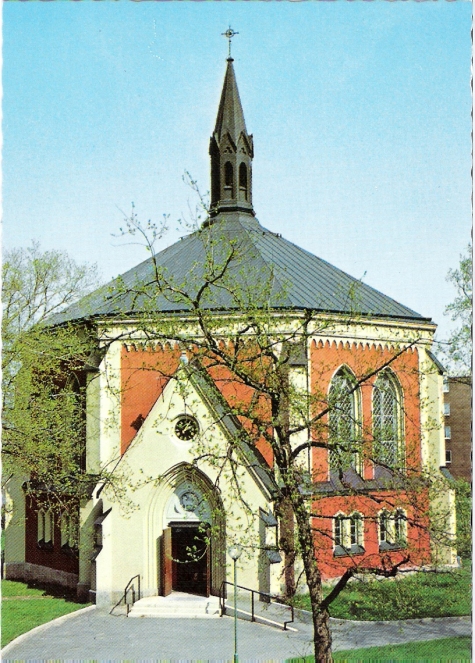
Ersta Church (Ersta kyrka)

Svenska:

Söndag och gudstjänst i Ersta kyrka.

Efter gudstjänsten går vi ut i Guds fria(?) natur, beger oss till Tantolunden där vi dricker kaffe, solar och somnar till en aning.

Kaniner hoppar förbi men Aurore hinner inte fånga några till middagen.

Hem och middag (utan kanin).

English:

Church service in Ersta church.

After this we take a walk into God's free(?) nature - a 'country walk' - and we head towards 'Tantolunden' the parc where there are a lot of small cottages, an allotment garden.

We drink our coffee, tan ourselves and fall asleep.

We see rabbits but Aurore is not fast enough in order to catch one for dinner (not for me but for her).

After this we went back home to dine (not rabbit).

Below some photos from the so called 'Tantolunden' in Stockholm:


(Foto Ersta kyrka kopierat från: http://www.allakartor.se/venue_images_475/148252_32287014.jpg)