Hi there!
You know what? Gunnar is working in a museum. Not the one which was looking for a janitor but another one which was really looking for a true guide and a curator. Meaning that my foreign husband has a more interesting job in the Center of France than when we were living in Stockholm.
Weird, isn't it?
While I read Swedish books. Unreleased. For a French publisher. I am among those people who read drafts or achieved novels and have to judge them for a specific market. Here, France. As when one watches films, there are embargos. I'm not allowed to talk, write about them or name them until they're released. So you won't read a word about them here.
Otherwise, I must inform you that I rank! Again. My professional website is on the first page of GG France. I get contacts, send offers but haven't found any serious client yet. The main problem not being my ability to rank but the lack of French credentials. Does it mean I will have to contact Scandinavian partners? We'll see...
Being occupied is nice, but not always.
We were invited to a Berry-German wedding in Berlin but won't be able to go there. That's a pity. I have known the groom since 1993 and would have enjoyed a lot going to Germany for the occasion.
And for more than a breakfast at Berlin Train Station.
The latest time we met my friend and his bride to be was during Les Rencontres de Luthiers, last year. It was too short and we are a bit ashamed to stay in Berry instead of finding a way to party in Berlin :-/
That's all folks.
If you want to keep updated with Gunnar or I, here are our main twitter accounts: @GunnarBjursell @cineaster
As we have a good friend working at the Nationalmuseum in Stockholm - The Museum of Fine Arts - we were given the opportunity not only to meet her but also having her as a guide on the above mentioned exhibition.
This exhibiton wants to convey an insight in to the fashion the above rulers wanted to be and were depicted in art and how this aimed at strengthen their power and make their compatriotes fear or respect them. It also gave them an aura of being appointed by God, as was the common thoughts and terminology at the time. What one display is the art of "governing through art" and how this also strenghtened the despots and their position among other rulers. The ruler who could afford the greatest artistst to immortalize them, using the most expensive materials, was of course in a way the most powerful. The interesting thing about this exhibition and the guiding by our friend was in part to see all the magnificent pieces of art, the room of Jean Baptiste Bernadotte (Karl Johan) and others but also some of the stories behind the 'staging' of the exhibition.
Three countries with different administrative cultures were to cooperate around this exhibition and it wasn't always they succeeded in doing so in a smooth way. One of the items displayed was three busts representing Napoléon, Alexander I and Jean Baptiste Bernadotte. Napoléon had been placed above the two others and this was not to the liking of the Russians who complained about this arrangement. The museum answered that first of all one have to admit that Napoléon was the most powerful leader of the three at the time and secondly that this is the way "we do it in Sweden". The Russians had to accept it!
Another issue was the questions about insurances for all the different works of art and some wanted very precise assertions about how this was going to be handled, while not always being as rigourous the other way around.
It was however a very interesting exhibition with a lot of extremely fine art and artistic work and when our friend had left us, to continue to work, we took a second look at the 'Staging Power'.
(Picture of Napoléon I taken from: http://blog.goldini.com/images/45737-41649/Napoleon.jpg) (Picture of Alexander I taken from: http://www.svenskhistoria.se/nyhetsbrev/userfiles/image/1809b.jpg) (Picture of Karl Johan/Jean Baptiste Bernadotte taken from: http://nationalmuseum.se/Global/utst%C3%A4llningar/H%C3%A4rskarkonst/bernadotte_282xxx.jpg)
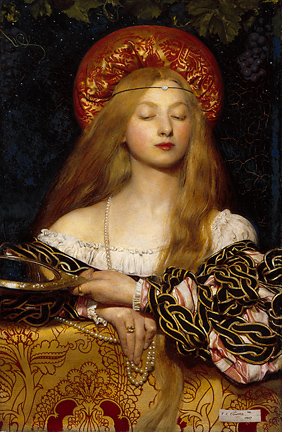
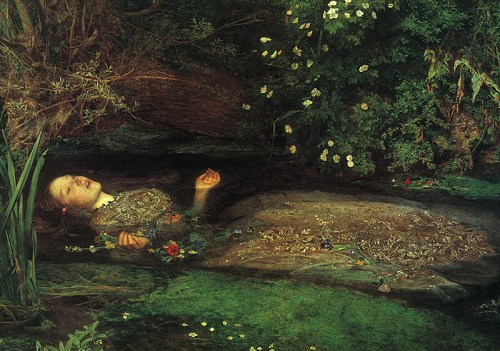
We spent 2h30 enjoying a really good exhitibion. The works of the Pre-Raphaelite Brotherhood that Mikael Ahlund had chosen to show were inspiring: _ they have a special atmosphere _ they are reflexive (dealing with art history, history and modern times) _ they show the artists' skills.
What excited me most was the "end" of the exhibition, where Arts & Crafts, Sub Rosa and Carl Larsson made a fantastic transition to the rest of the Nationalmuseum. Mikael Ahlund and his team succeeded in creating a strong event, inscribing it in the institutional frame. What else could a demanding visitor ask for?
(Photo painting woman at the top of the page copied from: http://www.preraphaelitesisterhood.com/cowper.jpg) (Photo painting Ophelia by John Everett Millais copied from: http://fredfred.net/skriker/images/fred/2005/pre-raphaelites/ophelia-millais.jpg) (Photo painting woman by a loom copied from: http://questionsconcerningreligion.org/images/113.jpg)
An interview with the curator Lena Essling (unfortunately in Swedish)
A day with "moving images". First, the Japanese artist Tabaimo who, for us, displayed surrealistic short stories, sometimes becoming a bit too Freudian for our taste. It was though entertaining, something quite rare for films shown in museums. Play was a less convincing atempt to show Moderna Museet's collection of moving pieces of art. The good surprise was that Gunnar and I had seen at least 5 works from past exhibitions (Kentridge, Rist, Eggeling, Just, Calder). In other words, we were not as illiterate as we at first had thought. To watch, hear and focus while other people are walking, other films are "making noise", made this enterprise difficult to fully appreciate. I hope we will be given the opportunity to experience them during different conditions next time...
It had been a while since we visited Millesgården. For the vernissage of this exhibition, the gallery hall was overcrowded. Works of some prestigious names (Liljefors...) hang on the walls, but unfortunately the quality of these water reflections was very unequal. We had been fooled.
Where were they, these water mirrors? In the remote fountain of this landscape? Half painted in the harbour of this or that one?
I guess we are too picky, but when we go to see Water paintings, we expect something more poetic and more skilled than what we experienced this time. We hope that the next vernissage will surprise us in a more positive way.
(Photo of painting of boats copied from: http://lidingosidan.se/images/1016.jpg) (Photo of painting of a mill copied from: http://lidingosidan.se/images/1018.jpg) (Photo of painting depicting the 'Näcken' playing his harp copied from: http://lidingosidan.se/images/1019.jpg)
The poster was great, the subject was interesting, but the exhibition... less. Or more. This was the problem: there were far too many works, and not all of them were worth their place in the National Museum. With less artworks the exhibition had been a curatorial success: Tight, clever, interesting. With this third extra, it became a cake with too much sugar and too much mediocre chocolate; very difficult to eat.
(Photo boy through a frame copied from: http://www.lakartidningen.se/store/images/7/7545/large/Lura_ogat_1.jpg) (Photo man with the head in a bucket copied from: http://www.onculture.eu/thumbnails%5C425-4.gif) (Photo of woman undressing her skin copied from: http://www.onculture.eu/thumbnails%5C425-2.gif) (Photo papers on a wall copied from: https://blogger.googleusercontent.com/img/b/R29vZ2xl/AVvXsEiRv2GDrPtPMtefNhm0k-pTchzE91HvvaYZ1oIrTdhS8rTLVu2AbULP_OAjR523lIM9qn-gmyRIIk5qavEaKvNqEz5E0FzcqSozWyr57uF28Xo5SIz2viypaP_y8o4gBzSGuj5R/s800/lura_ogat_6764.jpg)
Nice exhibition at the Moderna museet (The Museum of Modern Art). We learned a lot for a change. Will perhaps summarize more later on.
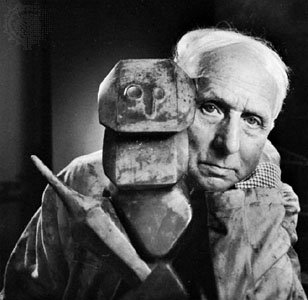
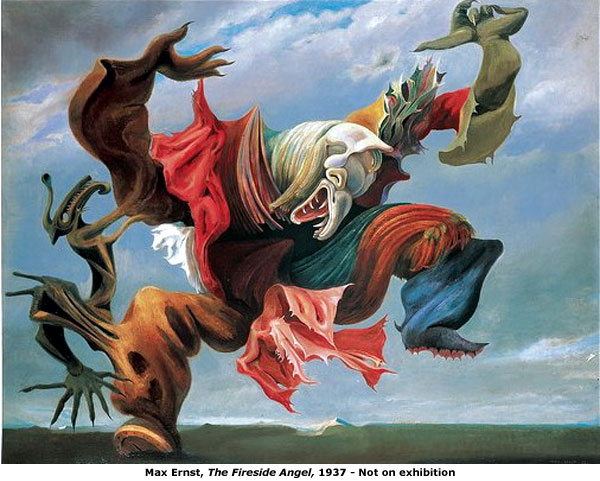
The Max Ernst exhibition displayed his different periods in Germany, France, America and Europe as the exhibitors have written. I don't know if Germany and France wasn't a part of Europe in those days? Anyway, the exhibition not only displayed his different whereabouts but first and foremost different aspects of Ernst and his artistic work.
Usually we see similar works of art by Ernst (or other artists) when being displayed but in this exhibition also less known works by the artist had been exhibited. I might add: Less known to me (Gunnar).
If you would like a more substantial look at the art by Ernst, I recommend a visit to the Museum of Modern Art (in Stockholm). I hardly think you will be disappointed.
(Photo Max Ernst copied from; http://tothewire.files.wordpress.com/2009/09/12049-004-fcdd9cb8.jpg) (Photo 'Fireside Angel' copied from: http://culturvista.files.wordpress.com/2009/08/maxernstthefiresideangel.jpg)
The exhibition was rather uneven and I will above all remember the Belgian artist Michaël Borremans. His technique, his work on the light were simply astonishing.
These musicians are very skilled BUT we did not appreciate the structure of the gig: 45 minutes performance 45 minutes pause 45 minutes performance It felt like seeing artists that cannot stand playing live anymore and who are too tired to make it.
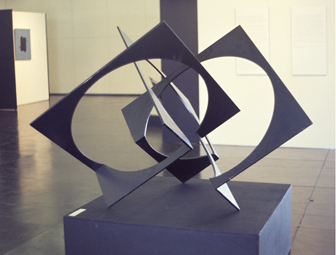
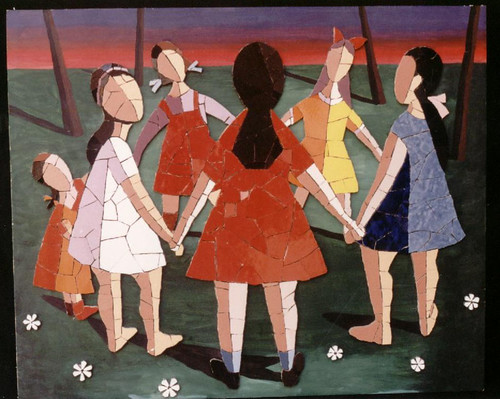
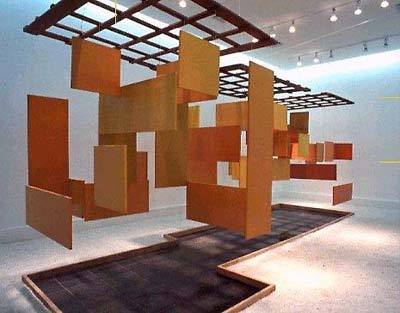
Aurore arbetar endast halv dag idag, onsdag, varför vi skall besöka Moderna museet för att se utställningen 'Tid och plats: Rio de Janeiro 1956-1964'. I denna utställning presenteras konst som tillkom under en, enligt utställningsinformationen, mycket kreativ period i Rio under sent 1950-tal till tidigt 60-tal. Under denna tid arbetade konstnärer, arkitekter, musiker, filmskapare och författare uppenbarligen sida vid sida för att skapa konstverk tillsammans. Här presenteras nu några av pionjärerna inom den gren av konsten som kallas neokonkretismen: Lygia Pape, Lygia Clark och Hélio Oiticica, Milton Dacosta, Amilcar de Castro, Franz Weissmann och många fler. Om det inte är alltför många besökare skall vi även ta en fortsatt titt på Warholutställningen.
English:
Aurore works only half-day today (7 am til noon), Wednesday, why we will visit the Moderna Museet in order to see the exhibition 'Time and Place: Rio de Janeiro 1956-1964'. In this exhibition they introduce or present art that were made during a very creative period in Rio, according to the information, namely the late 1950's til early 1960's, . During this time artists, architects, musicians, film makers and authors worked side by side to create art together. The exhibition presents some of the pioneers within the branch of art called neo-concretism: Lygia Pape, Lygia Clarkand Hélio Oiticica, Milton Dacosta, Amilcar de Castro, Franz Weissmann and many more. If there are not to many visitors we will continue looking at the Warhol exhibition.
Vi trodde inte att det vid denna tid på dagen (14-tiden) skulle vara särskilt många besökare men tänk vad vi bedrog oss. Fullt, fullt och fullt. Både svenskar och utländska besökare.
Warhol attraherar fortfarande i förvånansvärt stor utsträckning konstintresserade.
På det vernissage som tidigare föregick utställningen fanns flera kända svenska konstnärer som Karin Mamma Andersson, Jockum Nordström, Ernst Billgren m.fl. Ingen tycktes riktigt vilja mena att Warhol varit viktig för deras konstnärsskap och åsikterna gick isär om hans inflytande inom konsten överhuvud.
Nåväl, utställningen var också full, såtillvida att man behängt varenda kvadratmeter av de utrymmen man förfogade över.
Det fanns bl.a. ett mitt-parti med stora skärmar visandes olika happenings och filmer som Warhol kreerat. Här kunde man sitta på mjuka bänkar för att ta del av en film i taget eller se fler på samma gång (split vision).
Skall man verkligen se alla dessa filmer, vilket knappast någon gör, får man dock ägna mycket tid åt detta. En av filmerna visar en sovande man och bara den är över tre timmar lång.
Warhol ville inte själv se sina filmer enligt vad som berättas. Han skapade dem men då han någon gång i ett offentligt sammanhang deltog för att berätta om sitt skapande,ville han inte själv se igenom desa oeuvre. Jag förstår honom. Få är så intressanta att man orkar ägna sin tid åt dem.
Överhuvud kändes det 'överhängt' och man fick en känsla av att man ur olika samlingar letat fram så mycket man kunnat hitta för att skapa ett överdåd och en kvantitativt stor utställning.
Ser man till kvalité måste man säga att det var en hel del som skulle kunna ha lämnats utanför denna exposé utan att för den skulle förminska förståelsen för Warhol som konstnär.
Mycket var också déja vu-upplevelser precis som utställningen med Robert Rauschenberg. Det kändes lite daterat. Skillnaden med Rauschenberg-utställningen är att han som person är långt mer intressant vilket framgick i intervjuerna med sistnämnda.
Warhol var som individ - av det som framgår i intervjuer och liknande material - en rent ut sagt tråkig människa som mer arbetade med sitt yttre än sitt inre. Inga roliga anekdoter, ingen spiritualitet.
För den som inte känner till Warhol som konstnär i någon större utsträckning, kan denna utställning kanske visa sidor som går utöver Marilyn Monroe-repliker och Campbell-burkar.
Vi skall återkomma till utställningen en annan dag då det krävs fler besök för att få ett större helhetsgrepp kring allt som här förevisas.
We thought that at this time of the day (2 pm) there wouldn't be many visitors but we were wrong. Full, full, full. Both Swedes and foreign visitors. He still attracts surprisingly many persons interested in art.
Anyway, the exhibition was also 'full' regarding the fact that one had used every square meter of the space disposed for this retrospective.
During the vernissage a couple of days ago, I heard interviews with Swedish artists like Karin Mamma Andersson, Jockum Nordström, Ernst Billgren and many more. Most of them did not recognize Warhol as having had a major influence on their work. They couldn't even agree on if his influence on art had been as great as sometimes stated.
In the middle section they hade placed big screens displaying different 'happenings' and films created by Warhol. There were some soft 'benches' where one could sit and look at each and every film or see many at the same time (split vision). If one has the ambition to see all these films, something hardly anyone does, one has to spend a lot of time only concentrating on this. One of the films, showing a sleeping man, is more than three hours long for example.
Warhol didn't want to see his own movies when they were finished as someone told me. He created them but if he in a official context participated, talking about his artistic work, he wasn't to keen on looking at his own oeuvres. I fully understand him. Few of these films are interesting enough to make you want to spend time looking at them.
On the whole it felt as the exhbition was 'brimful' and one got the impression that the persons responsible for the retrospective had searched works in different collections all over the world in order to create a feeling of extravaganza and a quantitatively impressive exhibition.
If one look at it from the qualitative perspective I feel that they could have omitted a number of works in this exposé without diminishing Warhol as an artist.
A lot was also déja vu as with the Robert Rauschenberg exhibition last year or the year before. It felt as it was somewhat 'dated'. The difference between this and the Rauschenberg exhibition is that the latter as a person is much more interesting to listen to, as was displayed in the interviews with him during that retrospective.
Warhol as an individual - as far as one can tell from the interviews and similar material - was frankly speeking a very boring person who more worked on his exterior than on his interior qualities. No funny anecdotes, no esprit at all.
For those who are not - to any greater extent - familiar with Warhol as an artist, this might display certain traces that transcend the Marilyn Monroe replicas and the Campbell cans.
We will return to this exhibition another day as it demands a multitude of visits in order to be able to see the main features in this Warhol retrospective.
Aurore och jag besöker under kvällen Moderna museet för 'Första på Moderna' där denna gång (1/2) presenterades en happening.
Valeria Montti Colque hette konstnären som installerat ett rum smyckat och inrett för ett bröllop.
Man inväntar gäster som skall bevittna detta förbund mellan två älskande.
Gästerna anländer, vissa i par där man kommer med sin egen hustru eller make, andra ensamma för vilka denna ceremoni blir en påmnnelse om den stora kärleken som aldrig drabbat dem andra med förhoppning om att kärleken finns runt hörnet i en snar framtid. Kanske vissa gäster kan sägas vara par för vilka dock parrelationen aldrig blev det man knöt förhoppningar till att den skulle bli.
Här skall det också tolkas som staden som skall knyta band med makten, en allians som kanske inte grundar sig på romantik och kärlek, så som ofta skett i den mänskliga historien. Arrangerade bröllop vilka skall förstärka den ekonomiska eller politiska makten (eller både och) är och har varit ett återkommande inslag i den mänskliga gemenskapen.
Här får alla dessa representeras av 'skapelser' som i ett fall utgör en robotliknande 'person' där återvunnet material klär dennes dräkt, påminnandes om 'The Predator'. En annan lång 'individ' är klädd i metalldelar som gjorts till en klänning i vilken 'hon' (det upplevs som en feminin varelse) rör sig likt en värdig fågel utförandes nästintill parningsdanser framför de andra figurerna.
Övriga var målade och påhängda olika 'konsumtionsattribut'. En hade 'gossedjur' över sin dräkt, en annan ett lakan med ett ansikte målat på etc.
Alla dessa utförde rörelser korrelerade till varandra eller i enskildhet kanske uttryckandes de många gånger formaliserade beteendemönster som är en del av ett officiellt arrangemang. De kan också ses som uttryck för mytologiska representationer.
Vi stannade ej kvar för samtalet men själva happeningen i sig blev roande, underhållande och lite påminnande om en film som samlar olika disparata fiktiva figurer som interagerar i en fiktiv värld. Alla med olika förmågor eller oförmågor samt med olika typ av rangordning och relation till varandra, vilket uttrycktes i deras närmande och/eller fjärmande från varandra.
Dock kände jag inte att det uttryckte mer än så eller att jag kunde urskilja andra mer djupgående tankar kring mänskliga relationer utan den kvarstående känslan var en av underhållning och show. Inte illa i och för sig men kanske inte så innovativt som uttryck.
Dräkterna var dock intressant sammansatta och i dessa kunde man självfallet utttyda en hel del symbolladdat material.
(Photo taken from: https://blogger.googleusercontent.com/img/b/R29vZ2xl/AVvXsEiAR96oMGjhV1xVkdPbRh1Ojx0thAieEI6x3m8wirfa_C3NVyxkZ4LLIaYKWE-lzOpnawNfr8KOpI6ZpxHkraC7ptFd_3DjzJOTGb4t0p9gBKdab5z5raeILhjghbxYjThf6_Zh/s1600/n624843576_947153_7938.jpg)
English:
During the evening Aurore and I paid a visit to the Museum of Modern Art and 'The first at Moderna' where we this time is presented a happening built up around the work of the artist Valeria Montti Colque.
A room decorated and adorned for a wedding awaits us.
We await the quests coming to witness this alliance between two lovers.
The guests arrive, some in pair with their own 'wife' or 'husband' others alone and for whom this ceremony reminds them of the great love that never struck them. Others again with the expectations that the love exists somewhere around the corner in a near future. Maybe some of the guests could be said being couples for whom the relationship never developed in the way they once hoped it should.
This ceremony should also be interpreted (according to the information text) as the town tiing bonds with the power, an alliance not founded on romanticism and love, as being something quite common in the history of mankind. Arranged weddings supposed to strengthen the economical or political power (or both) have been recurrent features in the human community.
In this case all these guests are represented by 'creations', in one case looking like a robot-like 'person' where recycled material have been used, somewhat reminding of 'The Predator'. Another very tall individual is dressed in metal pieces made in to a dress, a robe in which 'she' (one tend to look at this individual as a 'she' I think) is moving in a very worthy way performing what looks like mating dance in front of the other 'figures'/guests.
There where other representatives for the guests at this wedding, all with special characteristics and interacting together or individually, against each other or in connection to each other, depending on the power relations between each and everyone.
To some degree it reflected the sometimes mannered behaviour so common at official arrangements as a wedding or the likes.
They could also be seen as mythological representations of different sorts. It was entertaining and reminded me of a movie that gathers different disparate fictitious figures or 'persons' interacting in a fictitious world.
I didn't however find other more symbolic or profound thoughts around this performance.
The dresses where however made in a way that could be seen as references to both our society on a global basis, as well as mythological references or references to the world of animals of which we are a part.
Svenska: Vi har ikväll - Aurore och jag - sett Christoph Willibald Glucks opera-tragedi i fyra akter: Orphée et Euridice. Skall återkomma med en recension. Biljetterna till denna föreställning kostade endast 10 kr./st. Ett utmärkt pris, eller hur? Engelska: We have this evening - Aurore and I - seen Christoph Willibald Glucks opera-tragedy in four acts: Orphée et Euridice. Will be back with a review. The tickets only costed us 10 Skr that is approximately 1 € or 1 $ 50. A reasonable price, don't you think?
(Photo taken from: https://blogger.googleusercontent.com/img/b/R29vZ2xl/AVvXsEgZz_68YCq5LhnIUkxK0bv_JcFK8iuxh05lcTKbdH7G6ZdBgUA_vlFnHpOHCOgQbHbxHDJiIW0ObLO2EHEouVu2qtnpXiAdpX5xJwdHDX8miqESBm0pi-HkV_3MeEYUSTEVGi3d/s320/havanna.jpg)
Svenska:
Aurore arbetar klockan 7-16 även idag och det är uppstigning med språng klockan 04.50 igen! Efter arbetet ses vi i stan för att besöka Moderna museet och den '1:a på Moderna'.
Denna gång är det konstnären David Svensson som presenteras. Han har bott och verkat på Kuba under ett antal år och det är från Kuba han har fört med sig det material han behöver för det verk som presenteras ikväll.
Hans utgångspunkt är de installationer vi får se vilka utgörs av ett antal draperade ljuskronor. Dessa har han efter viss möda fört ut ur Kuba för att använda i sin konst.
Ljuskronorna har en lång förhistoria då de kom till Kuba från Europa under den tid då landet var spansk koloni (1511-1898). En del av ljuskronorna kom från övriga Amerika under 1950-talet då Battista diktatoriskt ledde landet med hjälp och stöd från USA.
Nu har de alltså gjort ytterligare en resa och i vissa fall förts tillbaka till den kontinent - Europa - som de en gång kom från.
Curator Fredrik Liew för ett samtal med konstnären där de fr.a. talar om den rent 'upplysande' funktion dessa armaturer har i höstmörket. De berör även andra aspekter av dessas funktion.
Personligen menar jag att dessa tak-kronor också kan ses som varandes upplysande i den meningen att de har en historia att berätta. Denna historia härrör sig bl.a. från tiden för upplysningen (om man ser till vilken tid dessa takkronor tillkomst har daterats). Härigenom kommer begreppet att kunna användas i olika betydelser när det gäller tak-kronornas funktion och historia.
Liew talar också om de kokong-liknande tyg som lagts kring armaturen. Det är som om detta indikerar att tak-kronorna skall 'brista ut' någon gång i framtiden då tiden är mogen. Alternativt är de för alltid instängda med all sin historiska information samt sin skönhet.
Det vackra i dessa konstfullt utformade ljuskronor hålls undan oss besökare. Se men inte röra! Förändring är omöjlig om inte kokongerna brister.
Lite som situationen på Kuba? Se allt omkring dig av både skönt, fult samt orättvisor men försök inte förändra situationen för det går inte. Kuba är redan perfekt eftersom det är sprunget ur revolutionen, för att använda någon form av revolutionsromantiskt resonemang.
Likadant förhåller det sig med arkitektur, bilar och andra materiella föremål som många gånger är mycket daterade och vilka gör att man ibland förleds tro att nutida bilder från Kuba är tagna på 1940-50-tal. Det var bättre förr, tycks vara en devis för detta land i visst avseende.
Det som slog oss var färgerna på kokongerna. Varför hade konstnären valt just dessa? Kuba förknippar man i viss mån med starka färger men dessa var ganska matta. Eftersom vi aldrig frågade fick vi inget svar.
English:
Aurore works from 7 am til 4 pm as almost every day which means that we have to jump up at 4.50 am again!
After work we meet in order to visit Moderna museet for their monthly exhibition 'First at Moderna'.
This time it's the artist David Svensson who is introduced to the audience. He has lived and worked in Cuba for some years and it's from Cuba he has brought the material he needs for his work of art.
His starting point is the installations we see that conists of a number of draped chandeliers. He managed with some effort to transport these out of Cuba in order to use them in his art.
These chandeliers have a long prehistory dating back to the time when they were shipped from Europe to the country when Cuba were a Spanish colony (1511-1898). Some of the chandeliers came from other parts of America during the 1950's when Battista dictatorically lead the country with the help and support from the United States.
Now they've made another trip and in some cases been brought back to the continent - Europe - from where they once came.
Curator Fredrik Liew conducts a conversation with the artist where he starts by mentioning the enlightening funciton these chandeliers have during the dark autumn.
They could of course also be seen as having an enlightening function in the sense that they have a story to tell. This history also stretch through the Age of Enlightenment. Hereby the expression can be used in different ways applied to these chandeliers and their history.
Liew also speaks about the cocoon-like cloth that covers the chandeliers. It is as if the chandeliers in the future when ripe will burst out of their cocoons. Alternatively they are shut in with all their historic information and beauty for ever. The beauty in these artistically designed chandeliers are kept away from us - the spectators. Watch but don't touch! Change is impossible if the cocoon doesn't break.
A bit like the situation in Cuba? Look at everytning around you, both beautiful, ugly and injustices but don't try to change the situation because that is impossible. Cuba is already perfect as it's sprung out of the revolution to use some kind of revolutionary romantic reasoning.
It's the same thing with architecture, cars and other material objects that often are very dated, making you believe that photos taken today on Cuba emanates from the 1940's and -50's.
What struck us was the colours of the cocoons. Why did the artist choose these particular colours? Cuba is to some degree associated with strong colours but these were rather subdued. As we didn't ask we didn't get an answer.
(Photo taken from: http://www.channelclassics.com/media/upload/image/sq%20peter%20dijk.jpg)
Svenska:
Vi är uppe i arla morgonstund som vanligt Aurore och jag. Klockan fem hoppar vi som kängurur ur sängen, jag för att göra frukost och Aurore ockuperandes badrummet. Detta med känguru kanske är en sanning med modifikation?
Efter Aurore slutat sitt arbete ses vi i stan för att åka hem och äta middag.
Jag har uträttat en del ärenden samt hämtat de fribiljetter som Aurore vann via sms:ande. Det är Radiokören och Peter Dijkstra, den nye chefsdirigenten som begår sin debut i Oscars kyrka. Detta dessutom på min födelsedag.
(Photo taken from: http://sverigesradio.se/diverse/appdata/isidor/images/news_images/2482/1434004_520_374.gif)
English:
We get up early in the morning Aurore and I. At five o'clock we jump out of bed like kangaroos, I prepare breakfast while Aurore occupies the bathroom. The simile with kangaroos is perhaps a qualified truth?
After Aurore finished her work we meet in city and from there we turn back home for dinner.
I have run som errands and among other things collected the free tickets that Aurore won by sms-ing (is that the correct expression?) a telephone number.
It's the Swedish Radio Choir and Peter Dijkstra, their new chief conductor doing there first performance together in Oscars church. On my birthday.
Idag (enligt hans hemsida) fyller den norsk-svenske konstnären Kjartan Slettermark 75 år (enligt radion 5/8).
Denne provokatör - som han kommit att bli betraktad som - intervjuades i radio häromdagen och berättade där att efter att i Norge (Oslo) ha uppfört ett konstverk som handlade om Vietnamkriget fann han sig tvingad 'emigrera' till Sverige. Detta dels efter att någon försökt förstöra hans konstverk med en yxa dels att det senare kom att bli förstört genom 'stening'.
Det främsta skälet var dock att han själv kom att bli utsatt för häftig kritik från olika representanter för det norska officiella samhällsetablissemanget och allmänheten.
I Sverige kom han bl.a. att ägna sig åt undervisning men blev vid en skola avskedad eftersom han inte ville finna sig i det utvärderingssystem som användes då det gällde att bedöma elevernas kunskapsnivåer och kvaliteter som konstnärer.
Efter ett antal utställningar och performances blev han av en psykiatriker diagnosticerad 'psykiskt sjuk' med borderline-karaktäristiska drag. Han fick Hibernal (starkt psykofarmaka) utskrivet men vägrade ta det. Läkarna ville t.o.m. lägga in honom på en psykiatrisk avdelning för vård. Efter detta begärde han 'politisk asyl' på Moderna museet.
Hans första uppmärksammade 'Pudelföreställning' skedde på Liljevalchs vårutställning 1975. Numera finns ju denna pudeldräkt att se i Moderna museets permanenta utställning.
Ett händelsrikt liv med många strider och motgångar men även succéer i olika konstnärliga sammanhang.
Se mer om honom via länken vid hans namn ovan som leder direkt till hemsidan.
English:
The Norwegian-Swedish artist Kjartan Slettermark today (according to his homepage) celebrates his 75th birthday (5/8 according to Swedish radio).
This provocateur (as he has been regarded) was interviewed in Swedish radio the other day and he told the reporter that after the work about the Vietnam war, a work he displayed in Oslo, Norway, he found himself forced to 'emigrate' to Sweden.
This partly because someone had tried to destroy it with an axe partly because someone succeeded in destroying it by throwing stones at it. The prime reason though was that he became heavily criticized by the official Norway as well as by the general public.
In Sweden he taught art but was dismissed because he refused using the evaluation system that the school used in order to assess the standard of attainment and the quality of the works of the students.
After a series of exhibitions and performances in Sweden he became diagnosed as 'mentally ill' with borderline charasteristics by a psychiatrist. He was prescribed Hibernal (a strong psychotropic drug) but refused to take it.
The doctors even wanted to take him in to hospital for treatment. After this he applied for 'political asylum' at the Museum of Modern Art in Stockholm (Moderna museet). He wanted to move in there.
His first 'Poodle performance' that attracted attention took place at the Liljevalchs art gallery in 1975. Nowadays one can see this poodle costume as a part of the permanent exhibition at Moderna museet in Stockholm.
He has lived an eventful life with many conflicts, setbacks but also success in different artistic contexts.
See more about him through the link above connected to his name.
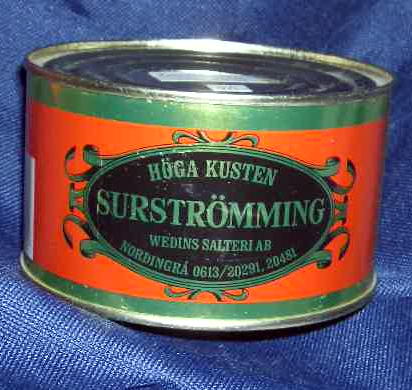
Augusti månads första dag och då känns det som om man är på väg in i hösttiden, vilket ju till del är riktigt. Kräftskivor, surströmming och annat som påminner oss om slutet på sommaren närmar sig. Det här låter nästan som en väckelsepredikant: "Ångra och omvänden Eder, slutet är nära!". Som alltid i vårt land - så som det rent känslomässigt upplevs - så hann inte sommaren börja förrän den är slut, även om vi inte är där ännu!
Idag stannar Aurore och jag hemma för att städa och iordningsställa vårt arbetsrum/kontor. Det är skönt att ha ett speciellt rum där man kan sitta och arbeta vid datorn i lugn och ro. På Lidingö var vi tre som skulle dela på en dator som dessutom stod i ett utrymme där man inte kunde sitta i fred och arbeta.
På eftermiddagen beger vi oss till stan för att dels Aurore skall besöka sin f.d. arbetsplats (slutade sista juli men har blivit lovad mer arbete senare i höst) dels vi skall besöka Moderna museet.
Det är alltså dags för '1:a på Moderna' där man idag presenterar den danske konstnären Joachim Koester(som jag nyligen läste om i boken 'Förebild film. Panoreringar över den samtida konstscenen' av Annika Wik, en doktorsavhandling).
Koesters kost utgår från bilder av andra. I en utställning i den danska paviljongen vid biennalen i Venedig för två år sedan utgick han från den expedition som polarforskaren Salomon August Andrée företog 1897 som också ledde till hans och hans medarbetares Knut Fraenckel (polarforskare och Nils Strindberg (fotograf) död. Man fann då bevarade fotografier/filmer som Strindberg tagit som klarat sig undan förgängelsen. Det är dock inte dessa som Koester utgick från utan de som endast blev bevarade som ett slags "visuellt brus" som kuratorn Fredrik Liew skriver.
Det är ett urval av dessa bilder som Koester nu har fotograferat och transformerat till film
Dessutom presenteras en film som handlar om det som kallas 'tarantrism' där man efter att ha blivit biten av giftspindeln Tarantula blir försatt i ett tillstånd av okontrollerade spasmiska rörelser. Dels visas dokumentärt material dels visas en film där dansare - utan att vara bitna av Tarantulan - framför dans i en stil som imiterar de rörelser som blir resultatet av giftspindelns bett.
Denna film fick mig att tänka på läkaren Jean Marie Charcot vid sjukhuset La Salpêtrière vilken studerade hysteriska anfall och dokumenterade dessa. Inte minst använde han sig av sin hustru som studieobjekt. Vet inte varför denna bild kom i mitt huvud men en annan, mer obehaglig, bild som uppenbarade sig hos mig var de experiment som nazisterna under andra världskriget ägnade sig åt då man stängde in människor i tryckkamrar samt dokumenterade deras reaktioner då de till slut dog av det höga trycket.
I det stora hela var jag inte imponerad av Koesters verk - så ej heller Aurore - och kände inte heller att han kunde kasta särskilt mycket ljus över sina tankar kring deras tillblivelse.
Hem och middag.
English:
The first day of August and then it feels as if we are heading towards autumn, in itself correct unfortunately. Crayfish parties, surströmmingskivor and other things reminding us of that we are approaching the end of summer.
This almost sounds like a revivalist preacher: "Repent and convert! The end is near!".
I think most people in our country - at least emotionally - feel as if summer never got (or ever ) got started before it ended (ends), even if we are not there yet!
Today Aurore and I stay at home in order to clean and put in order our study/office.
It's convenient to have a special room were one can sit in peace and quiet and work.
At Lidingö we were three persons using one computer, with the computer in a room were it was almost impossible to work alone.
In the afternon we leave home and head off towards city where Aurore is going to visit Dfm Fiktion, her former workplace and after that we are going to visit the Museum of Modern Art .
It's time for the series the first at Moderna and tonight they present the Danish artist Joachim Koester.
Koester's art takes its starting point in pictures by other artists. At an exhibition in the Danish pavillion at the Biennial in Venice, two years ago, his starting point was the polar expedition led by the Swedish polar researcher Salomon August Andrée in 1897, an expedition that led to his and his companions - Knut Fraenckel and Nils Strindberg - death. Many years later when their bodies were found, one also found well preserved photographs/films taken by Strindberg.
It was however not these photos/films that interested Koester but more those that were preserved only as som kind of "visual noice" as curator Fredrik Liew writes in his presentation.
It's a selection from these pictures that Koester photographed and transformed into the film My Frontier is an Endless Wall of Points.
Besides this film another film is introduced, a film that deals with the phenomenon called tarantism, a disease or disorder caused by a bite from the poisonous spider the tarantula, leading to a state of uncontrolled spastic movements.
Koester partly shows documentary material partly a film with dancers - not bitten by the spider - perform a 'dance' or movements imitating the movements of people who have been affected by a bite from the spider.
This film made me think of doctor Jean Marie Charcot at the hospital La Salpêtrière outside Paris who studied hysterical attacks and documented these. Not least did he use his wife as an object for his studies. I don't know why this image appeared in my head but another more disturbing image I internally visualized was the experiments that the nazis did during World War II.
I was not impressed by the works by Koester - neither was Aurore - and he wasn't able to shed some light over his thoughts around the making of his art.
Beauty mask to remove the dead cells accumulated on our faces.
And Susan Hiller at Moderna Museet. It was all about new surfaces and interpretation.
I always say that I remove the ancient skin when I use cucumber beauty masks. And Susan Hiller uses mass produced artefacts to make something bigger, blurrier (reminds of Thomas Ruff) in order to revelate something beneath the surface of the representation. She uses psychoanalysis and questions the veracity of one's vision on the world.
Her art is not that exciting but she talks very well about it.
I like American artists: they can express their view on what they create.
I, Aurore, liked the choir and the orchestra a lot.
The tenor, Tito Beltranhad no voice. He was singing like Fozzie Bear in the Muppet Show. I was not impressed at all and neither was Gunnar. The mise en scène was also very classical and very boring. 2 acts, 2 unities, many hundred occasions to fall asleep, but we did not.
Ice cream to cheer us up. And back h...
Now it's my (Gunnar's) turn: Rigoletto. When it came to the soloists I fully agree with Aurore concerning Tito Beltran who otherwise is a very good singer.
In the rôle as Rigoletto we saw Marcus Jupither, the son of a very well known Swedish opera singer (bass singer), Rolf Jupither. I found his performance good and partly brilliant.
Lennart Forsénwho was excellent and even better than the leading male singer Jupither. Forsén's bass is very smooth and deep and at the same time powerful.
Katarina Leosonas Maddalena, Sparafuciles sister was also very good.
One singer though stood above the others: Olga Mykytenkoas Gilda. She was brilliant all through the opera and gave her best in every detail of her performance. Her coloratura was fantastic, her mezzo voce fantastic and when fading away in the diminuendo parts she really showed off. This was the first time she sang this rôle but it was as if she had sung it many times before and had had time to elaborate her character and her vocal performance.
She was really the big attraction of the evening!
As I didn't find any exerpts with Tito Beltran, I give you Jussi Björling: La donna è mobile:
Inbjudna till en vernissage på Millesgården beger Aurore och jag mig dit för att sen en utställning som visar verk av både Carl Milles men också inspiratören och nestorn Auguste Rodin.
Milles besökte ju som så många andra Rodins ateljé och fick goda råd av honom angående skulpterandet som konstform. Det syns också klara likheter i vissa verk, bl.a. ett verk om Helvetet av Milles som klart och tydligt anknyter till Rodins' 'Helvetesporten' som han arbetade på under många år.
Jag kan inte gå in på alla detaljer och all information utan endast konstatera att det var intressant att se dessa giganter representerade på samma gång i en utställning på svensk mark.
Förra sommaren var Aurore och jag i Rodins' park men vi gick aldrig in i själva museet. Nu fick vi av intendenten höra om en annan utställningshall i Paris närhet (om jag minns rätt?) som visar andra verk av Rodin än dem man ser på hans museum i Paris.
Efter detta blir det Kulturhuset och en fotoutställning som heter 'Speed of Life' om Formel 1-livet i dess olika former. Fotografen heter Mikael Jansson och han har under många år varit en hängiven åskådare i samband med Formel 1 lopp men jag kan inte påstå att han lyckades förmedla något unikt eller något som fick mig som föga intresserad, känna ett större intresse för denna sport.
Café och därefter Kungsträdgården där de har de så kallade 'Resedagarna-Hela världen i Kungsträdgården', en mässa med fokus på resor. Vi besökte denna mässa även förra året men i år var vi mer där för att se om vi kunde få gratis tygkassar, vilka de delade ut vid förra mässan, de är alltid bra att ha sådana. Detta fann vi dock ej och det var få tävlingar anordnade. Nul!
De mytologiska motiven var vi visst inte klara med som jag skrev i en tidigare blogg utan vi ser dem även idag: "Herr Ovidius förmodar jag?" (Nationalmuseum).
Denna film handlar om en man vars fru blir mördad och där man griper en seriemördare som erkänner en rad olika mord men inte detta. Då man senare finner ytterligare två kroppar i närheten av den plats man fann Margot, börjar polisen undersöka saken ånyo. Mannen får en länk via mail med en tid då han skall titta på en övervakningskamera som visar hans fru - eller är det hon? I så fall efter att hon mördades vilket skulle betyda att hon lever?
Invited to a vernissage we set out for Millesgården Aurore and I, for an exhibition that display works by both Carl Milles and the source of inspiration and nestor Auguste Rodin.
As many other artists and sculptors Milles visited Rodin's studio and received many good advice concerning sculpturing as an artform. There are similarities between some of their works, among others a work about hell by Milles that obviously connect to 'The gates of Hell' by Rodin, a big 'piece' of art he worked on for years. I can't refer to all the information but only establish that it was interesting to see these two giants represented at the same time in one exhibition on Swedish soil, so to speak.
Last summer Aurore and I visited the park in which we find the museum of Rodin in Paris but we never entered the museum as such. Now we heard from the curator that there are another exhibition hall nearby Paris (if I remember right) that show other works by Rodin than those exhibited in the museum in Paris.
After this we continue to the Cultural Center ('Kulturhuset') and a photo exhibition called 'Speed of Life' dealing with the life within the Formula One world in it's different aspects. The name of the photographer is Mikael Jansson and he has for many years been a dedicated spectator in connection to Formula One races. I can't say though that he succeeded in mediating something unique or something that would make me more interested in this sport.
Café and after that Kungsträdgården ('Kings Garden') where they have arranged the so called 'Travelling Days-The whole World in Kungsträdgården'. This is a trade fair focusing on travels. We visited this fair last year to but this year it was more in order to see if we could get some free bags of fabric, as they where handed out for free last year. We couldn't find any and there where no competitions or very few. Nul!
We had not finished looking at 'the mythological motives' so we continued with them today: 'Mr Ovide, I presume?' (Nationalmuseum).
This film tells the story of a man who's wife gets killed but when the police arrest a well known serial killer, he admits other murders he has committed but not this one. Later on one find two more bodies nearby the place where his murdered woman - Margot - was found dead and the police starts to investigate the case once more. Through a link in his e-mail he receives a message that tells him to - at a specific time - watch a surveillance camera and there he can see his wife, or is it her? If it is, is she still alive and how can this be acounted for? The mystery begins and also a wish from the husband to find the truth around his wife's possible murder.
(Photo Carl Milles copied from: http://info.detnews.com/dn/history/milles/images/10.jpg) (Photo Auguste Rodin copied from: http://funnymagic.typepad.com/.a/6a00e54ef7abbe88330120a66346f4970b-500wi) (Photo copyright Mikael Jansson: http://www.smp.se/multimedia/dynamic/00287/PS_Bok_1__190608_jp_287879c.jpg)
(Photo racin car from 'Speed of Life' copied from: http://slimanedesign.blogg.se/images/2007/article_sge_hcw89_260507134309_photo00_photo_default_512x295_1180448674_8733603.jpg)