1 Corinthians 13:12: "For now we see through a glass, darkly; but then face to face: now I know in part; but then shall I know even as also I am known".
In this film, the story is enacted on an island where Karin (Harriet Andersson) - who suffers from schizophrenia, recently released from a mental institution - her husband Martin (Max von Sydow), her father David (Gunnar Björnstrand) and her brother Minus (Lars Passgård), meet during the vacations.
 David is a novellist, not able to find a theme for his coming book and also a person aiming towards the Parnassus of poets but not reaching his goal, this in spite of the fact that his books are selling very well. This doesn't interest him as he wants to become 'immortal' setting out high demands on his writing. The latter leading to the "writer's block" he is now suffering from.
This summer he 'must' spend some time with his family as he always has been an asent father constantly travelling the world. His absenteeism affects his daughter as well as his son but, in a way, also Martin, who is left with no grown up man with whom he can discuss his problems.
 Martin is a doctor and he has been given the information that Karin's disease is incurable but in spite of this he wants to stay with his wife, still loving her, at least that is what he says.
Somewhere deep below he nourishes a hope of her recovery in spite of the diagnosis given and at the beginning of their vacation, Karins seems to have become much better.
Their love-/sex life is however nonexistent and this is of course a result of both her illness but also her medication and state of mind, created by these two facts. Martin is however very stoic.
 Linus is a teenager more and more discovering his sexuality and the obvious incestuous feelings between him and his sister is soon revealed, creating a state of 'angst' within them both.
In one scene Linus complains about the womanhood, saying that they are false, seductive creatures, luring men into their web and then humiliating them.
When his sister treats him as a small boy, almost crowing with him, it doesn't reduce his anger and frustration.
When it comes to Karin, she is not at all in such a good state as the group pretends her to be.
She is not interested in physical contact with her husband but tends to be more aroused by her brother, she is not focused on anything and she doesn't succeed in creating a relationship with her father either, although in this case he is more to blame than her.
On the same time we see the same pattern between Martin and her as between her and Linus, that is to say that Martin treats her like a small girl, almost like a daughter more than a grown up woman and wife ("Oh, my little child!").
Gradually Karin's state of mind degrades - if one shouldn't look upon it as if she has reached a higher sense of awareness - but during this process, important discoveries are done, concerning the relationship between the different individuals.
 David is bluntly told by Martin that he is emotionally turned off versus his daughter and son and that he, to a certain degree, is responsible for her state of mind and the fact that she feels abandoned and lonely in the world. Martin also tells David that he has found the latters diary, where he - besides writing about the incurable state Karin is in - also reveals that he wants to use her illness as material for his next novel!
David doesn't relate to his son either and this might be one of the reasons for Linus's frustration concerning women.
Martin, fights with his love for Karin and his knowledge about her health condition, visioning a wife being hospitalized for months or maybe years. One shall love each other "for Better and for Worse, Till Death Do Us Part" but if it's only for worse?
 A new turn is introduced when Karin becomes convinced of the fact that there is someone talking to her through the walls in one of the rooms in the house and this voice belongs to God.
Martin discovers her when she is about to listen and speak to God and tries to reason with her. At the same time we see David, discovering the same thing but not intervening as he is emotionally turned of, incapable of reacting to the different expressions of her illness.
Finally encountering the 'God', it's not at all the god Karin anticipated.
On the same time Karin has found David's diary where he writes about her schizophrenia and what the doctors have said about her being terminally ill but worse (as mentioned above): He reveals that he wants to use his daughters state of mind in order to write a book and this is a most shocking thing for Karin, of course.
Linus awakening sexuality and Karin's inability or disinclination to resist a sexual encounter with her little brother, partly relieves their frustration but also leads Karin into a deaper 'mental disorder'.
Finally she is taken to hospital again.
In the end we get to see a conversation between David and Linus, ending with the latter saying: "Father spoke to me"!
As seen above, there are a lot of questions about human relations arising but maybe fewer answers:
How they can deteriorate and how they can be restored, about love and the persistence of love; about the idea that all kind of love is good or even from God, even incestuous ones (according to David in his conversation with Linus after the latter having revealed his sexual encounter with his sister); about our self-image and how it can be turned upside down very easily when put to a test; our moral standards and their validity; about God and what role God plays in all this.
We can also ask ourselves who, among these individuals, is emotionally most 'normal' in all this.
Karin's feelings of sexual nature towards her husband are cut off but in my opinion (Gunnar), she is a feeling and sensitive woman, maybe more sensitive than any of the three men, although her medicine make her somewhat numb.
David is apparently the most emotionally cold person among them all, not relating to anyone, not even himself;
Is Martin an emotional and sensitive person or is he more the rational doctor, in need of sex but having no deeper feelings of more profound nature towards his wife?
Finally we have Linus, the sexually frustrated teenager. On the same time he seems to be the one who, perhaps, more than the others is able to relate to his sister on an intellectual and emotional level. The question is if this is good or not?
(Poster copied from: http://movieposters.2038.net/p/Sasom-i-en-spegel.jpg)
In this film, the story is enacted on an island where Karin (Harriet Andersson) - who suffers from schizophrenia, recently released from a mental institution - her husband Martin (Max von Sydow), her father David (Gunnar Björnstrand) and her brother Minus (Lars Passgård), meet during the vacations.
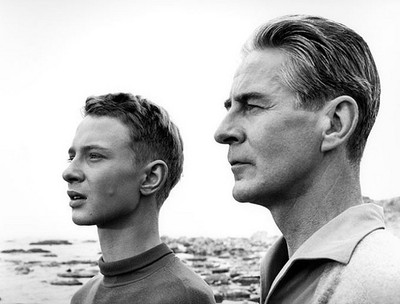 David is a novellist, not able to find a theme for his coming book and also a person aiming towards the Parnassus of poets but not reaching his goal, this in spite of the fact that his books are selling very well. This doesn't interest him as he wants to become 'immortal' setting out high demands on his writing. The latter leading to the "writer's block" he is now suffering from.
This summer he 'must' spend some time with his family as he always has been an asent father constantly travelling the world. His absenteeism affects his daughter as well as his son but, in a way, also Martin, who is left with no grown up man with whom he can discuss his problems.
 Martin is a doctor and he has been given the information that Karin's disease is incurable but in spite of this he wants to stay with his wife, still loving her, at least that is what he says.
Somewhere deep below he nourishes a hope of her recovery in spite of the diagnosis given and at the beginning of their vacation, Karins seems to have become much better.
Their love-/sex life is however nonexistent and this is of course a result of both her illness but also her medication and state of mind, created by these two facts. Martin is however very stoic.
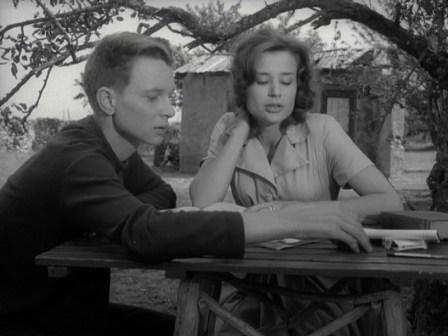 Linus is a teenager more and more discovering his sexuality and the obvious incestuous feelings between him and his sister is soon revealed, creating a state of 'angst' within them both.
In one scene Linus complains about the womanhood, saying that they are false, seductive creatures, luring men into their web and then humiliating them.
When his sister treats him as a small boy, almost crowing with him, it doesn't reduce his anger and frustration.
When it comes to Karin, she is not at all in such a good state as the group pretends her to be.
She is not interested in physical contact with her husband but tends to be more aroused by her brother, she is not focused on anything and she doesn't succeed in creating a relationship with her father either, although in this case he is more to blame than her.
On the same time we see the same pattern between Martin and her as between her and Linus, that is to say that Martin treats her like a small girl, almost like a daughter more than a grown up woman and wife ("Oh, my little child!").
Gradually Karin's state of mind degrades - if one shouldn't look upon it as if she has reached a higher sense of awareness - but during this process, important discoveries are done, concerning the relationship between the different individuals.
 David is bluntly told by Martin that he is emotionally turned off versus his daughter and son and that he, to a certain degree, is responsible for her state of mind and the fact that she feels abandoned and lonely in the world. Martin also tells David that he has found the latters diary, where he - besides writing about the incurable state Karin is in - also reveals that he wants to use her illness as material for his next novel!
David doesn't relate to his son either and this might be one of the reasons for Linus's frustration concerning women.
Martin, fights with his love for Karin and his knowledge about her health condition, visioning a wife being hospitalized for months or maybe years. One shall love each other "for Better and for Worse, Till Death Do Us Part" but if it's only for worse?
 A new turn is introduced when Karin becomes convinced of the fact that there is someone talking to her through the walls in one of the rooms in the house and this voice belongs to God.
Martin discovers her when she is about to listen and speak to God and tries to reason with her. At the same time we see David, discovering the same thing but not intervening as he is emotionally turned of, incapable of reacting to the different expressions of her illness.
Finally encountering the 'God', it's not at all the god Karin anticipated.
On the same time Karin has found David's diary where he writes about her schizophrenia and what the doctors have said about her being terminally ill but worse (as mentioned above): He reveals that he wants to use his daughters state of mind in order to write a book and this is a most shocking thing for Karin, of course.
Linus awakening sexuality and Karin's inability or disinclination to resist a sexual encounter with her little brother, partly relieves their frustration but also leads Karin into a deaper 'mental disorder'.
Finally she is taken to hospital again.
In the end we get to see a conversation between David and Linus, ending with the latter saying: "Father spoke to me"!
As seen above, there are a lot of questions about human relations arising but maybe fewer answers:
How they can deteriorate and how they can be restored, about love and the persistence of love; about the idea that all kind of love is good or even from God, even incestuous ones (according to David in his conversation with Linus after the latter having revealed his sexual encounter with his sister); about our self-image and how it can be turned upside down very easily when put to a test; our moral standards and their validity; about God and what role God plays in all this.
We can also ask ourselves who, among these individuals, is emotionally most 'normal' in all this.
Karin's feelings of sexual nature towards her husband are cut off but in my opinion (Gunnar), she is a feeling and sensitive woman, maybe more sensitive than any of the three men, although her medicine make her somewhat numb.
David is apparently the most emotionally cold person among them all, not relating to anyone, not even himself;
Is Martin an emotional and sensitive person or is he more the rational doctor, in need of sex but having no deeper feelings of more profound nature towards his wife?
Finally we have Linus, the sexually frustrated teenager. On the same time he seems to be the one who, perhaps, more than the others is able to relate to his sister on an intellectual and emotional level. The question is if this is good or not?
(Poster copied from: http://movieposters.2038.net/p/Sasom-i-en-spegel.jpg)
(Photo Lars Passgård and Gunnar Björnstrand copied from: http://frudecibel.blogg.se/images/2010/lars-p-_98299473.jpg)
(Photo Max von Sydow and Harriet Andersson in the bedroom copied from: http://navid.blogg.se/images/2008/s_som_i_en_spegel_1199616612_8026980.jpeg)
(Photo Lars Passgård and Harriet Andersson by the table copied from: http://www.anderslif.se/sasom2-1270499378.jpg)
(Photo Gunnar Björnstrand and Harriet Andersson in the boat copied from: http://lista.se/public/assets/2010/01/30/1264862284_4b64444c4464b_d0f8be631be5653dc670a7dfbc9aba87_447_308.jpg)
(Photo Harriet Andersson talking to the wall copied from: http://30.media.tumblr.com/tumblr_lb4idlm4Ab1qzzxybo1_500.png)